

What it does
- Brings together the sources, signals and scenarios of your investment analysis.
- Built around the process of each house, made to measure.
- Prepares the committee’s work; the decision stays with your teams.
Who it is for
Wealth managers, asset managers, family offices and investment committees.
Inside the reasoning of Noésis
From information to decision.
And from decision to experience.
A network of agents, a shared memory, distinct responsibilities. Follow what flows, who steps in and what the house keeps.
Identified sources, a shared context.
Market data, economic releases, company results and in-house research join the file. Each piece of information carries its source and date; missing or outdated data stays flagged.
- What goes in
- Markets · economy · companies · research
- What comes out
- Sourced, dated elements to examine.
- Who can do what
- Collect and document. A source makes no decision.
The CIO’s knowledge becomes a shared memory.
Analyses find past theses, decisions and objections. The CIO and the team bring their investment criteria, notes and corrections. Each agent receives the context its mission needs, according to its access rights.
- What goes in
- Sources · history · knowledge of the CIO and the team
- What comes out
- A research file linked to the memory of the house.
- Who can do what
- Consult according to one’s role. Access and rules stay defined by the house.
The agents answer each other, the objections remain.
Macro, valuation, fundamentals, trends, liquidity and scenarios: the specialists examine the same file for and against. They exchange sourced arguments and counter-arguments. The judges weigh the positions, then a synthesis keeps the disagreements.
- What goes in
- Shared file · signals · scenarios and probabilities
- What comes out
- A reasoned proposal, with its uncertainties and objections.
- Who can do what
- Analyse, challenge and propose. The committee synthesis is not an approval.
Risk frames what can be proposed.
Risk, management and compliance review the intended size, concentration, liquidity and fit with the portfolio. A file outside the rules goes back for revision or stays blocked. A disagreement between models remains a signal to examine.
- What goes in
- Proposal · portfolio · limits and rules of the house
- What comes out
- A controlled file, to correct or to submit to the decision maker.
- Who can do what
- Frame, request a revision or block according to the configured rules.
The CIO decides. The allocation keeps its explanation.
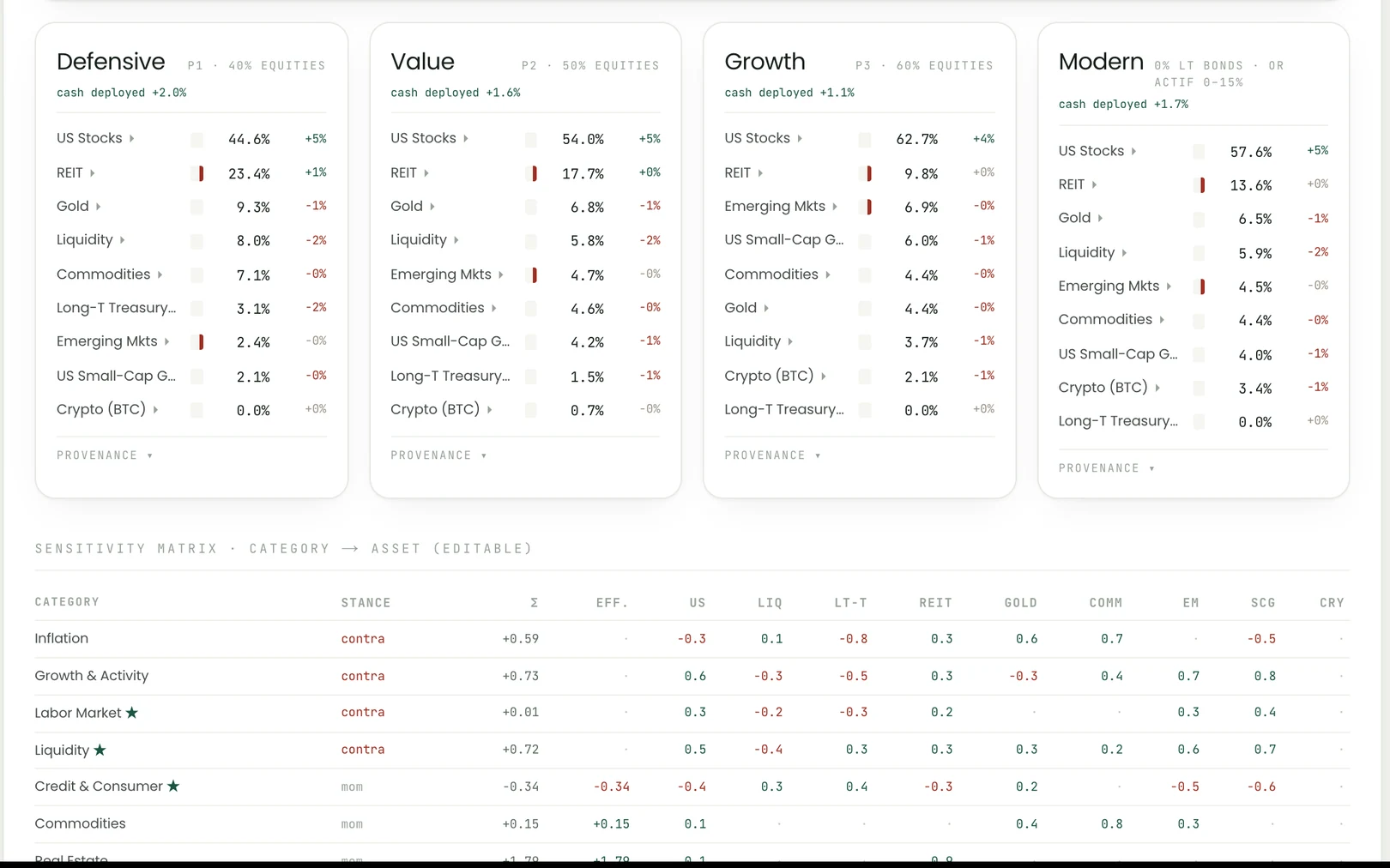
The CIO or the authorised manager reviews, changes, approves or rejects the proposal. The decision feeds the house view and its model allocations. Atlas then applies it to each client’s objectives and constraints, with the manager’s approval.
- What goes in
- Controlled file · human judgement · mandate
- What comes out
- A dated, justified decision, then an allocation to follow.
- Who can do what
- The authorised person decides. This representation triggers no order.
Every decision leaves something for the next one.
Dated forecasts are compared with observed results. Errors, disagreements and the CIO’s corrections remain available. Lessons reviewed by the team enrich the context of the next files; new hypotheses still need to be validated.
- What goes in
- Decisions · results · resolved forecasts · team feedback
- What comes out
- A richer memory and forecast reliability to assess.
- Who can do what
- Assess and propose adjustments. The memory grows, permissions do not widen on their own.
A brain that builds its experience. The links stand for the sources found, the arguments challenged and the lessons kept. This memory helps prepare the next decision; its growth does not guarantee performance and gives the agents no more autonomy.