








July's Import Bill Was Data-Centre Equipment
USD 118.8 billion of goods deficit, and three line items account for almost the entire increase. The AI build-out subtracts from measured GDP while it adds to America's productive capacity, and Washington is now weighing a tariff on it.
What landed in July
On 3 September the Bureau of Economic Analysis published the July trade figures, and the headline did what headlines do. The combined goods and services deficit widened to USD 118.8 billion of goods and USD 88.6 billion overall, up from USD 71.2 billion in June, a jump of more than 24% in a single month and the widest gap in sixteen months (BEA, 3 September 2026)
Two clarifications before the argument, because both matter.
The goods deficit prints at USD 118.8 billion on the customs basis and USD 119.6 billion once the statisticians restate it to balance-of-payments rules. Same shipments, two conventions. And this was the largest monthly gap of 2026, well short of the all-time record: March 2025 reached USD 158.7 billion, when importers raced the tariff schedule. For the year to date the deficit has actually narrowed by USD 188.4 billion, or 29.6%, against the same period of 2025.
So the story of July is a change in what America is buying, inside a gap that is shrinking on the year.
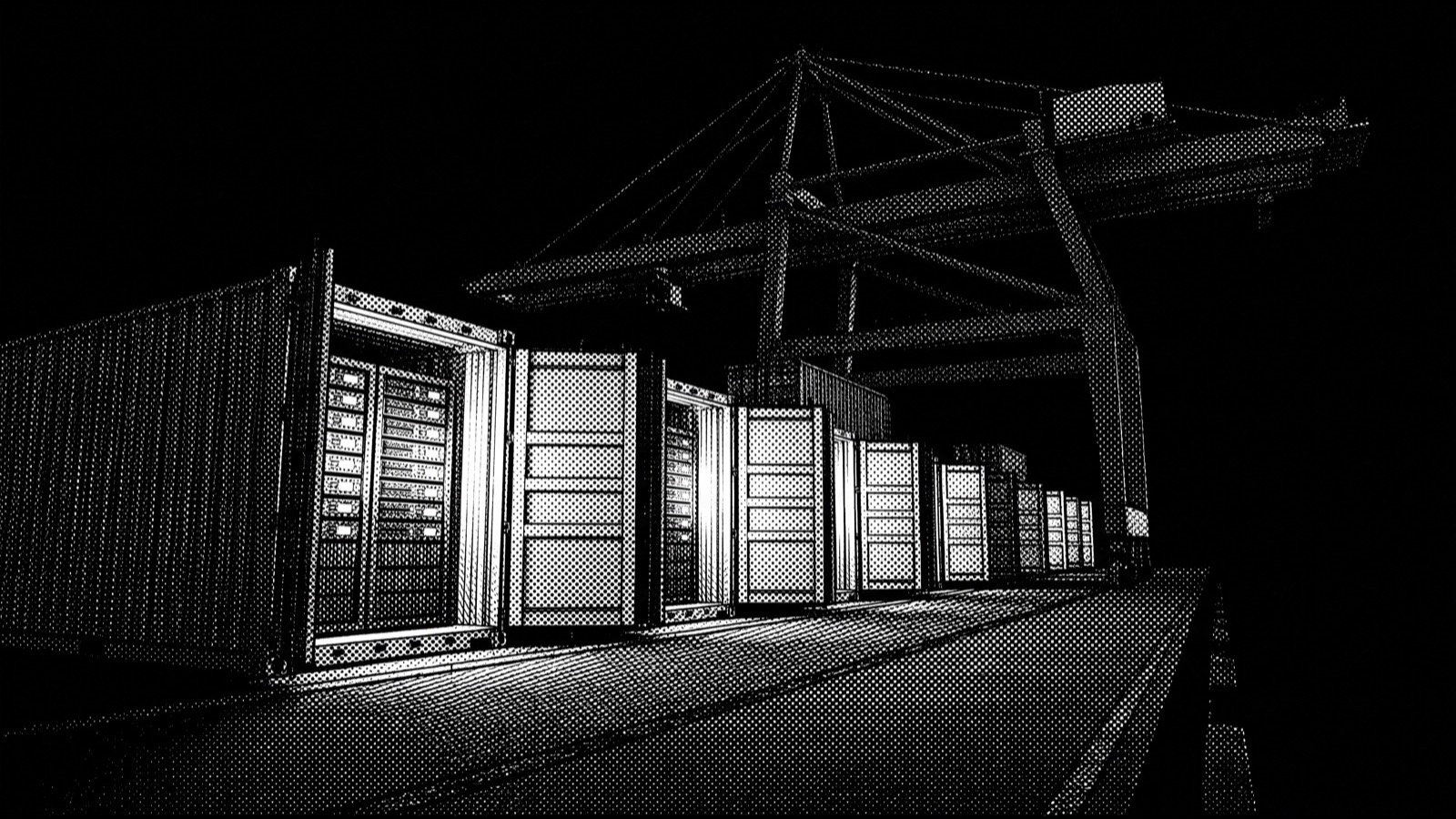
Imports rose USD 10.8 billion to USD 399.3 billion. Exports fell 2.1% to USD 310.7 billion, with the weakness concentrated in industrial supplies. The entire import increase sits in one bucket. Capital goods, the category covering machinery and equipment that businesses buy to produce other things, rose 11.3% to roughly USD 140 billion, an increase of USD 14.4 billion on the month. Three line items inside it account for USD 14.7 billion of that: computers up USD 6.9 billion, computer accessories up USD 6.6 billion, and semiconductors up USD 1.2 billion. The computer-accessories figure is the largest ever recorded.
Capital goods now make up roughly 44% of everything the United States buys from abroad. The bilateral gap with Taiwan, the world’s contract manufacturer of advanced chips, widened by USD 5 billion in the month to USD 20.66 billion. South Korea, home of the memory industry, was the second-largest contributor.
This is the physical hardware of an industrial build-out, arriving fast enough to move a national accounting aggregate.
Why a machine that makes you richer shows up as a minus
The confusion here is baked into how national income is measured, and it is worth taking sixty seconds to make it plain, because almost every commentary on a trade release gets it backwards.
Gross domestic product is meant to count what a country produces. The statisticians build it by adding up what everyone spends: households, businesses, government, and foreigners buying American exports. That sum overcounts, because some of what Americans spend goes on things made somewhere else. So imports get subtracted at the end. The minus sign on imports is a correction, put there to cancel a double count that happened earlier in the same equation.
Follow one server through it. A cloud company in Ohio buys a rack of accelerators assembled in Taiwan for USD 3 million. That purchase enters GDP once as business investment, plus USD 3 million. It leaves once through the import line, minus USD 3 million. Net effect on this quarter’s GDP: zero. The arithmetic is doing exactly what it was designed to do, which is to record that Taiwan produced the machine and America did not.
Then the rack gets bolted into a building, plugged into a substation, and starts producing output. Every hour of compute it sells from that day forward is American output, made by American capital. GDP in the quarter of arrival captured none of that, because GDP measures a flow of production over three months and a capital stock is a level that sits on the ground for years.
This is why the July number can read as a deficit problem and describe an investment boom. The Atlanta Fed’s nowcast for the third quarter stood at 4.8% on 1 September, with non-residential equipment contributing 0.40 percentage points and intellectual property another 0.38. Net exports subtracted 1.20 percentage points from second-quarter growth in the same model. Both figures are describing one economic event from opposite ends.
I would add the honest caveat the nowcast itself carries: real final sales, the cleaner measure of underlying domestic demand, has been tracking closer to 2.3% while the headline runs well above it. Trade and inventory swings of this size make quarterly GDP a noisy instrument. Read the composition, treat the headline with suspicion.
The build-out has a physical address
The equipment arriving at Long Beach and Newark is the visible tip of a chain that runs a long way into the physical economy, and the house AI framework is built around measuring that chain rather than the software on top of it.
The first anchor is capacity. In notes taken from OpenAI’s chief financial officer Sarah Friar on 8 June 2026, the rule of thumb is that one gigawatt of installed compute supports roughly USD 10 billion of annual revenue, that the binding scarcity through 2026 and 2027 is compute rather than demand, and that the capital is being deployed now against demand expected between 2028 and 2032. The constraint she describes sits in the physical world: “chips, energy, land, regulation, talent”.
The second anchor is metal. Working from research, a gigawatt of data centre consumes about 50’000 tonnes of copper. At roughly 15 gigawatts of annual build, that is around 750’000 tonnes a year of new copper demand, against total global supply growth of about 500’000 tonnes last year. Parts of the American grid that this equipment plugs into are over a century old. The electricians who wire it are earning about USD 150’000 straight out of secondary school, which is what a shortage looks like once it reaches a wage.
So the customs entry for a container of servers is the leading indicator of demand for copper, transformers, turbines, switchgear, cooling and skilled trades, most of it sourced and installed domestically over the following twelve to twenty-four months. The import shows up in the trade data immediately. Everything downstream of it shows up in American output over the years that follow.
There is a line from Anthropic’s own research team, published on 5 June 2026, that has stayed with me since I read it: “The doing … now costs almost nothing in human time, even if it still has costs in compute”. July’s trade release is what that sentence looks like when it is weighed at a port. The human labour has been squeezed out of the process. The compute cost remains, and it is physical, and it has to be shipped.
The macro the number sits in
Before accepting that this is investment rather than a demand leak, it is worth checking whether the wider economy looks like one that is losing its spending abroad. The macro model I work from scores several hundred indicators against their own history and reports each category in sigma, the statistician’s unit for “how unusual is this by its own standards”. Zero is ordinary. Plus one means the reading sits at the top edge of where that series normally lives.
On the live lens as of 1 September, Growth and Activity reads an aggregate Z of +0.56, which is 1.3 sigma above its own mean. Inflation reads +0.68, or 0.9 sigma above its mean. The Labor Market sits at -0.06, meaning almost exactly average. Credit and Consumer reads -0.28, and Bonds and Rates reads -0.81, which is a thin read and should be treated as one.
Growth running warm with labour at its long-run average is the signature of an economy where activity is being carried by capital spending. Unemployment was 4.10% in July. Money supply is expanding at 5.4% year on year. The federal funds rate sits at 3.63% against an inflation rate that leaves the real policy rate around +0.33%, so policy is mildly restrictive. The curve has normalised, with ten-year Treasuries 0.43 percentage points above two-years.
The one number in that set that should make anyone pause is at the long end.
Thirty-year Treasuries yield 5.27%. This equipment cycle is being financed at the most expensive long-term cost of capital in a generation, and increasingly with borrowed money rather than operating cash flow. Set that against our global-liquidity framework: roughly 75% of transactions in global markets are the refinancing of existing debt, and the five-year maturities issued during the zero-rate years come back for rollover through the second half of this decade. The Liquidity category in the model reads +0.04, essentially dead average.
An investment boom running into a refinancing regime, funded at a 5.27% long bond, is where the fragility in this story actually lives. The trade balance is a symptom of the boom. The rollover calendar is the thing that can end it.
The exemption Washington is now weighing
Which brings us to the policy, and to the part that makes this month’s release politically loaded.
On 14 January 2026 the President signed a Section 232 proclamation imposing a 25% duty on certain advanced computing chips and specified derivative products, effective the following day. The measure was drawn narrowly. Chips imported for use in US data centres were carved out, alongside exceptions for domestic manufacturing capacity, repairs, research, startups and civil industrial use. The same proclamation directed Commerce to report by 1 July 2026 on the semiconductor market specifically for American data centres, and on whether the tariff needed adjusting.
That report has come and gone, and the carve-out is now under review. Digitimes headlined on 28 August that the “exemption that shields US$143 billion of US server imports is now on the table”, noting that the January measure “barely touched the machines the AI build-out runs on”. The article sits behind a paywall and I have read only the headline and that visible excerpt, so I hold the USD 143 billion figure as reported rather than verified.
The mechanism is worth stating slowly, because it is where the piece lands.
The trade deficit is the political scoreboard on which this administration has staked a great deal. The fastest-growing entry on that scoreboard is now the equipment that the American AI industry needs in order to build anything at all. Placing a 25% duty on it raises the dollar cost of every gigawatt of capacity, compresses the return on the largest private investment programme in the US economy, and does very little to move production onshore inside the timeframe that matters, because the advanced fabrication and the advanced packaging are not in the country yet and will not be for years.
And it would work, on the scoreboard. A tariff that makes servers more expensive reduces the quantity imported. The goods deficit narrows. The release reads as a policy success in the month it prints, while the thing that shrank was the country’s own capital formation. Any duty on this category is a tax on American capital expenditure with the incidence falling on the domestic buyer, collected at the border and recorded as a trade improvement. That is the most consequential thing in the July data and the least likely to be said about it.
Where this could be wrong
Three ways, and I want them on the record with the argument rather than behind it.
The first is pull-forward, and it is the serious one. Importers who expect a duty stockpile ahead of it, and a review of the data-centre carve-out has been public knowledge since the summer. Some meaningful share of July’s USD 14.4 billion is likely fourth-quarter orders pulled into the third. Pull-forward inflates the size of the move. The build-out behind it was already running. But I would not defend the July magnitude as a clean run rate, and a soft August print would be the expected consequence rather than a refutation of the thesis.
The second is depreciation, and it cuts at the core of the argument. My claim is that this equipment adds to productive capacity. That holds only if the capacity lasts. If the economic life of an AI accelerator turns out to be three years rather than six, the capital stock depreciates nearly as fast as it accumulates, and what looks like investment behaves closer to a consumable input. The accounting treatment of useful life across the large operators is contested and I hold this as a risk to watch rather than a forecast, but it is the assumption on which the whole “productive capacity” case rests.
The third is the financing loop. A growing share of this spending is funded through arrangements in which the chip vendor, the model lab and the cloud provider are each other’s customers and each other’s investors. While demand validates, the loop reads as a virtuous cycle. If demand stalls, the same arrangements read as vendor financing, and the import line falls away quickly.
What to read on 6 October
The August trade report is due on 6 October. The line to open first is computer accessories, which set its record at USD 6.6 billion in July. Held near that level with no tariff announcement in between, and the build-out is running at pace and July was not a stockpile. Collapsed, and it was.
The second thing to watch has no release date attached, which makes it harder and more important: the Commerce determination on the data-centre carve-out. That decision settles whether the next set of trade figures measures America’s capital investment or the tax on it.
Markets research and commentary for a general readership. This is not personalised investment advice.
Be the first to read our upcoming papers.
Some articles are reserved. Leave your email to unlock access to upcoming Meotis Research publications.
Share