





Anthropic targets a trillion-dollar IPO and tightens its subscribers' limits on the same day
While its bankers tour investors for a stock-market debut valued at ~$1 trillion targeted for October, Anthropic folds Fable 5 into its Max and Team Premium plans, but cuts their limits by a third. Across the table, China answers this race to Wall Street with a 29-country governance bloc built on open-source.
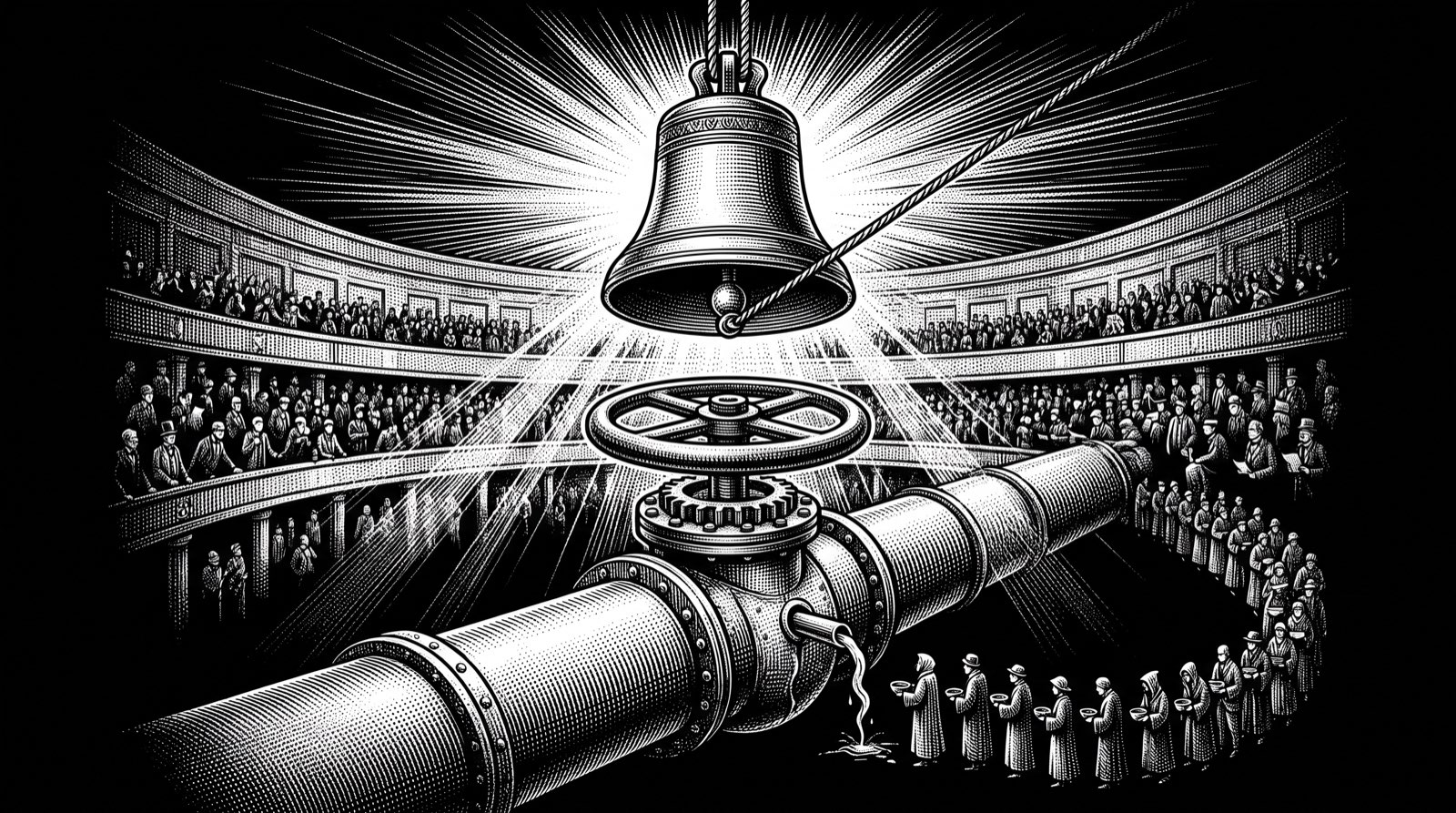
July 20, 2026 compresses the two faces of the AI market into a single day. On one side, Anthropic kicks off the investor roadshow for a stock-market debut that could make it the first company to go public at a trillion-dollar valuation, targeted for October. On the other, that very same day, it folds its most capable model into its subscription plans, while cutting those plans’ usage limits. A stock-market ascent and a tightening of access, both decided the same morning. And in the meantime, in Shanghai, China wraps up a summit where twenty-nine countries have just founded an AI-governance bloc anchored in open-source. Two visions of the market are drifting apart.
Anthropic opens the roadshow for a trillion-dollar IPO
A month and a half after filing its confidential registration statement (S-1) with the SEC on June 1, Anthropic is moving to the next stage: its bankers began scheduling meetings with institutional investors around July 15, a sign that a stock-market debut as early as October is drawing closer. Valued at $965 billion in its latest round, the company is reportedly targeting a Nasdaq listing that could make it the first company to debut on public markets at a trillion-dollar valuation. According to the Wall Street Journal, it projects reaching break-even by 2028, two years ahead of the profitability target set by OpenAI (2030).
Across the table, the calendars diverge. OpenAI did file its own confidential registration in early June, right on Anthropic’s heels, but is now leaning toward 2027 according to Bloomberg (June 26), citing market volatility and the trillion-dollar valuation floor set by Sam Altman. The race to the market, briefly in sync, is desynchronizing: Anthropic accelerates, OpenAI holds back.
The warning comes from elsewhere. SpaceX, which listed on the Nasdaq on June 12 at $135 a share (~$75 billion raised, ~$1.77 trillion valuation, the sixth-largest U.S. market cap on day one), peaked at $225.64 on June 16 before pulling back over three sessions, briefly slipping below its IPO price, wiping out some $600 billion in value before recovering to around $153 by late June. IPO advisers are watching this trajectory closely as they gauge the market’s appetite for the next mega-listing.
The same day, Fable 5 enters the plans, but the limits drop
While the bankers tout growth, the management of scarcity is playing out on the product side. As of July 20, Claude Fable 5, Anthropic’s most capable frontier model, is included in all Max and Team Premium plans, but at 50% of the limits. And on the same day, the underlying usage limits of those plans drop by roughly a third, the two cuts compounding for premium subscribers. Pro and Team Standard users, for their part, lose bundled access: they continue to reach Fable through usage credits billed at API prices, with a one-time $100 credit as compensation. “Demand for Fable has been challenging to predict,” Anthropic acknowledges, having pushed back this rollout several times since the model returned on July 1, to secure additional capacity.
The move is revealing of the strategy. Rather than cutting its per-token rates in the face of Grok 4.5 ($2/$6) or China’s Kimi K3 ($3/$15), Anthropic tightens bundled access and pushes heavy users toward metered billing. The message sent to the market is consistent with the IPO filing: the frontier model is not an unlimited plan, it’s a meter.
Comparison table: API prices as of July 20, 2026
On the API side, per-token rates did not move this week; the day’s change concerns subscription access, not the price per million tokens. The landscape remains stretched across a factor of one hundred between the priciest and the most economical.
| Model | Input ($/M tokens) | Output ($/M tokens) | Note |
|---|---|---|---|
| Claude Fable 5 (Anthropic) | 10.00 | 50.00 | frontier; subscription limits tightened July 20 |
| GPT-5.6 Sol (OpenAI) | 5.00 | 30.00 | launched July 9 |
| Claude Opus 4.8 | 5.00 | 25.00 | |
| Kimi K3 (Moonshot, China, open-weight) | 3.00 | 15.00 | launched July 16; cache-hit 0.30 |
| GPT-5.6 Terra | 2.50 | 15.00 | launched July 9 |
| Gemini 3.1 Pro (Google) | 2.00 | 12.00 | doubles beyond 200k context |
| Claude Sonnet 5 | 2.00 | 10.00 | launch price until August 31, then 3/15 |
| Grok 4.5 (xAI) | 2.00 | 6.00 | price published; EU access still restricted |
| Gemini 3.5 Flash | 1.50 | 9.00 | |
| Grok 4.3 / 4.20 (xAI) | 1.25 | 2.50 | 1M context |
| GPT-5.6 Luna | 1.00 | 6.00 | launched July 9 |
| Mistral Large 3 | 0.50 | 1.50 | |
| DeepSeek V4 Pro | 0.435 | 0.87 | after the May cut |
| DeepSeek V4 Flash | 0.14 | 0.28 | 1M context; cache up to −99% |
Prices collected on July 20, 2026 from official pages (Anthropic, OpenAI) and specialized aggregators for models without a directly accessible pricing page. Notable on the distribution side: GitHub Copilot added Kimi K2.7 Code (Moonshot) as the first open-weight model in its picker, billed at provider list rates under its usage-based billing.
Shanghai: China’s open-source counter-model
On the same day Wall Street prepares the largest AI listing in history, the World AI Conference 2026 (July 17–20) closes in Shanghai on an entirely different grammar. Xi Jinping delivered his first-ever address at the conference, positioning China as the champion of open-source AI and shared governance. On the eve of the opening, on July 16, 29 countries signed the founding agreement of WAICO (World Artificial Intelligence Cooperation Organization), an intergovernmental body headquartered in Shanghai and oriented toward the Global South (Indonesia, Brazil, Malaysia, South Africa, Senegal, Russia, Pakistan…). Beijing is pledging 5,000 AI training opportunities and cooperation centers over five years for developing countries.
The echo with the pricing market is direct. Kimi K3, ranked in the world’s top 4 at $3/$15, and the arrival of Kimi K2.7 Code inside GitHub Copilot show that open-weight has become a credible cost lever, and that is precisely the axis China is putting forward. Two market models are taking shape: on one side a Western frontier locked behind meters and trillion-dollar valuations, on the other an open-weight tier distributed widely, cheaper, and now anchored to a geopolitical bloc.
Compute, still the blind spot of falling prices
Beneath the per-token price war, the cost of infrastructure isn’t budging. Renting an H100 trades between $2.01 and $11.06 an hour depending on the provider (a market median around $3.15/GPU-hour): specialized clouds dip toward $2, hyperscalers stay above $10. To buy, an 80 GB PCIe card runs $25,000 to $30,000, an 8-GPU DGX system tops $350,000, and a purchased server only breaks even after more than 18 months of near-continuous utilization. In other words: the posted token price is falling, but the hardware bedrock that carries it stays expensive, which is exactly why vendors lock down access to their frontier models rather than discount their subscriptions.
What this means for a Swiss organization
Three concrete points of attention. First, a subscription’s posted price no longer tells you anything about actual access: the Fable 5 episode shows a limit can be halved, and its base cut by a third, overnight. Measuring your own consumption precisely becomes a prerequisite for any decision. Second, open-weight is no longer a fallback: with a model in the world’s top 4 and native integration into developer tools, sovereign self-hosting is a governance and cost choice, not a performance compromise. Finally, the commitments of vendors racing toward an IPO can change fast: a company aiming for a trillion-dollar listing has different incentives from one that simply sells tokens, diversifying your providers remains the best pricing insurance.
Control your AI costs instead of enduring them. Comoto OS orchestrates the market's best models, proprietary or open-weight, from a sovereign core hosted in Switzerland: every task routed to the right model, every token traced, every decision auditable, whatever limits your provider decides on tomorrow.
Discover Comoto OSBe the first to read our upcoming papers.
Some articles are reserved. Leave your email to unlock access to upcoming Meotis Research publications.
Share