



CIO Cockpit: the investment laboratory that re-reads itself every night
Upstream of Atlas, Meotis Finance runs its own cockpit: a proprietary macro model, a shared research memory re-read every night, and one rule without exception, the manager decides. A guided tour.
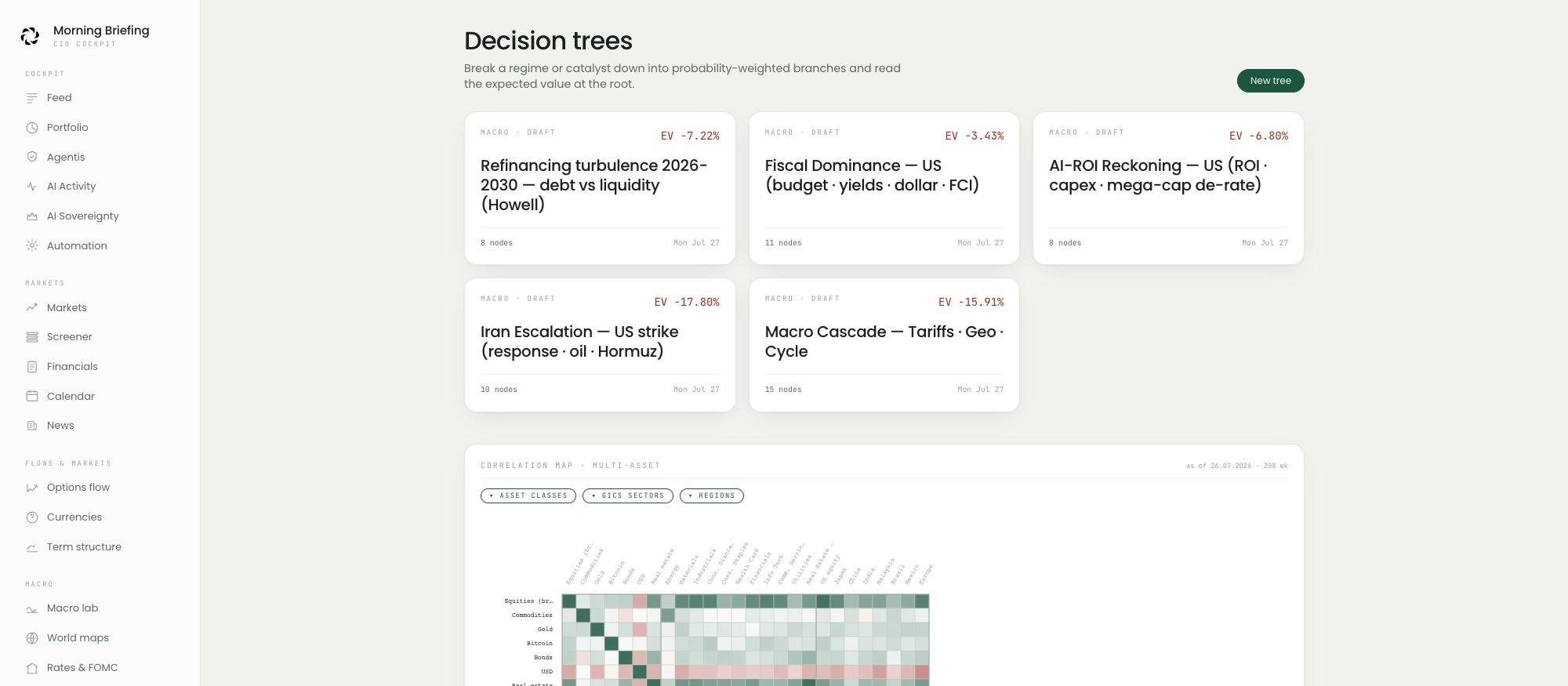
A management platform is only worth as much as the investment process it serves. So before offering Atlas to wealth managers, Meotis Finance built and ran its own cockpit: the CIO Cockpit. It is the laboratory where the house view is made, challenged and documented, day after day.
The principle fits in one sentence: the system prepares, the manager decides, and nothing is lost.
A proprietary macro model
At the base sits an in-house macro model: close to 200 indicators across 13 categories, continuously updated, with contrarian and momentum signals held to a strict discipline rather than to the mood of the day.
The model produces a regime read: where the economy sits on the growth, monetary policy and inflation axes, and which asset classes that regime has historically favoured.
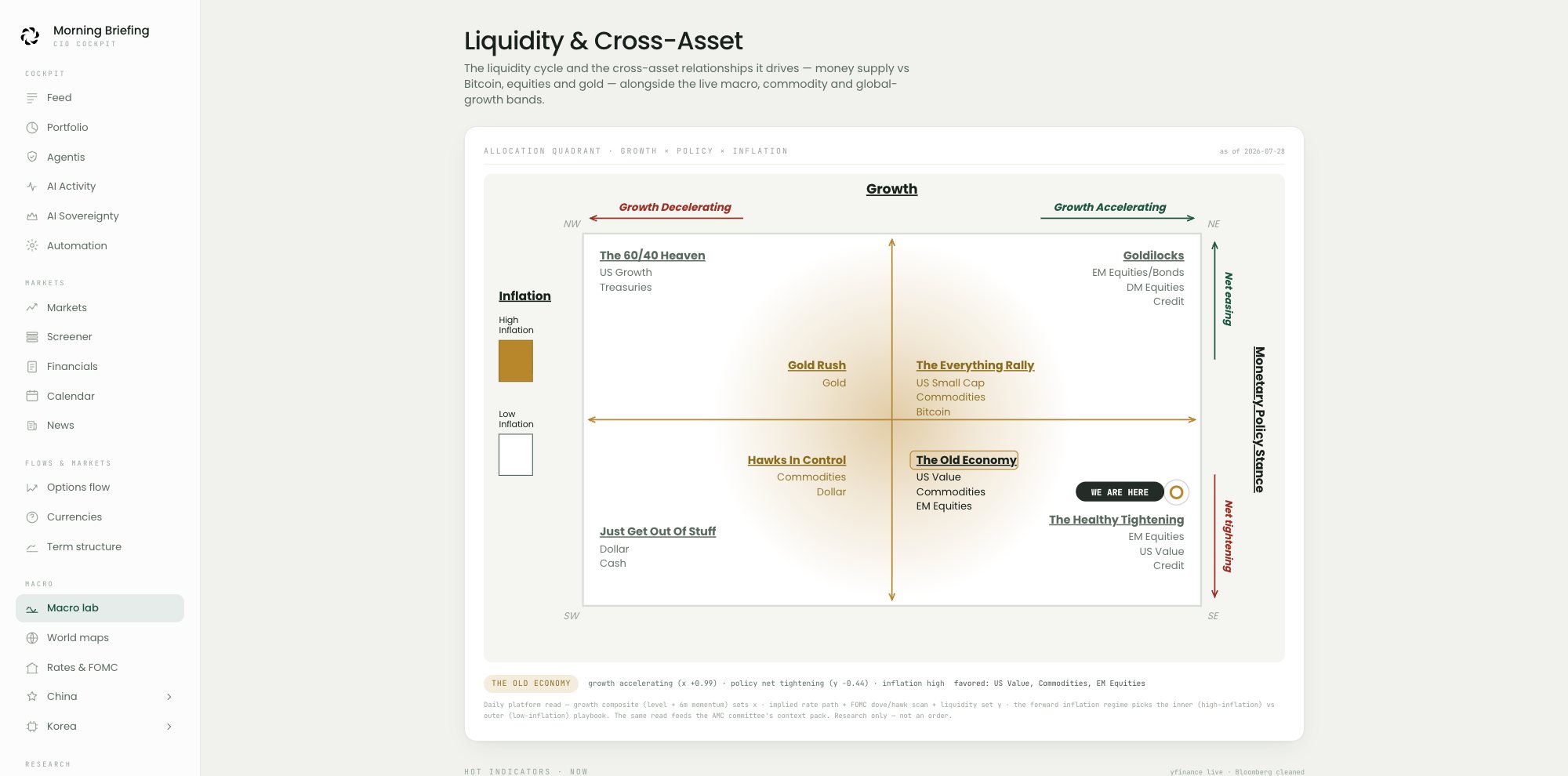
The map never says what to buy. It says where we are, which is already a great deal, and it says it with a date.
The shared memory
Every analyst’s research, their notes, sources and conferences, is centralised in a shared memory. That corpus feeds the firm’s cognitive core, which re-reads it every night: it tests the theses against market data, re-estimates the probability of each scenario and documents every revision it makes, strictly within the firm’s investment criteria.
Every reading, every note durably enriches the next analysis. An article read in January is still working in July.
The system proposes, the manager decides
The cockpit goes further than simply refreshing numbers. When research or a recent event warrants it, it proposes new indicators of its own accord, built exclusively on verifiable data and named sources.
And that is where the house rule applies: the manager decides. Nothing enters the cockpit without approval.
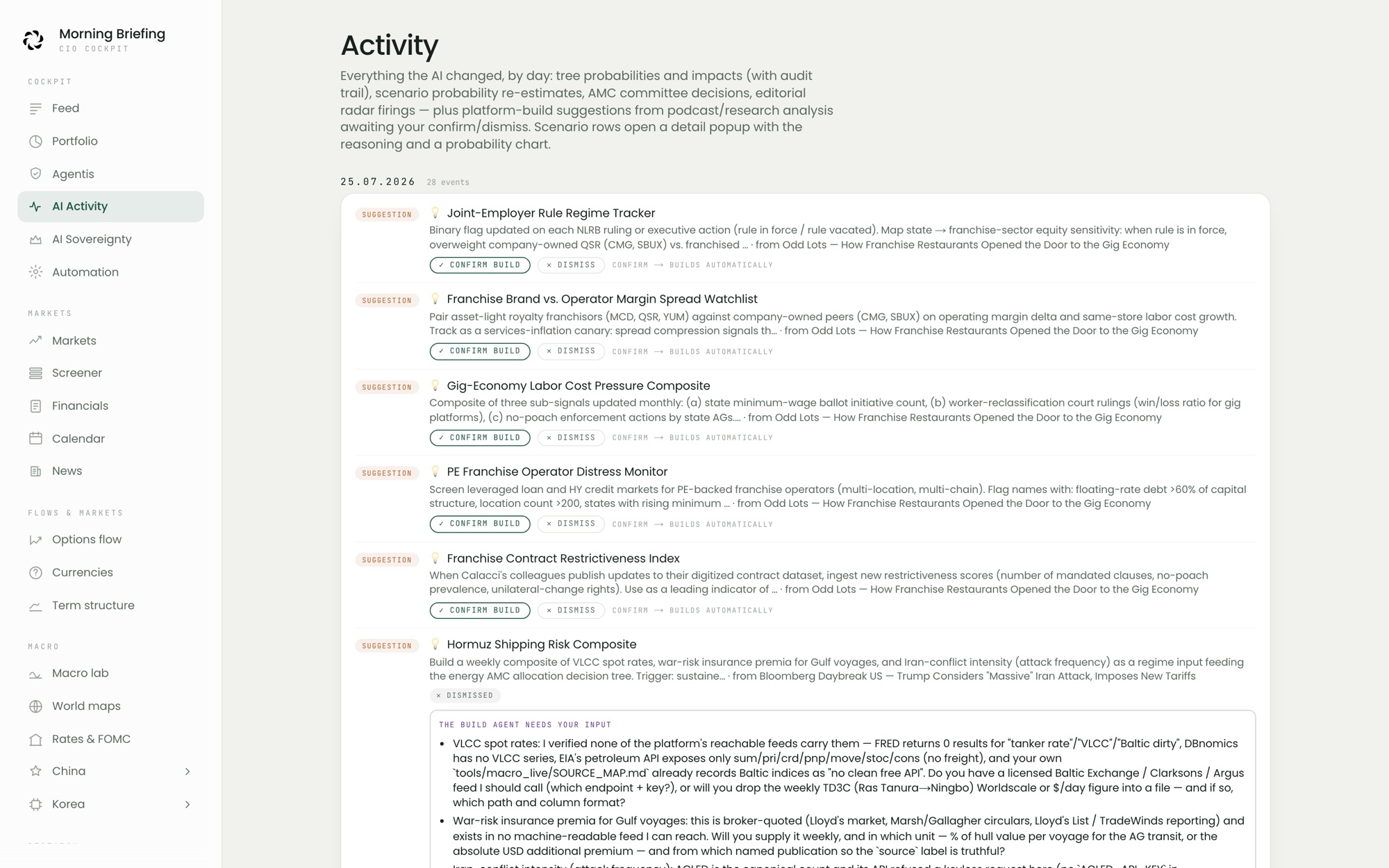
That detail matters more than it looks. An agent that cannot find a clean source for an indicator does not fabricate one: it opens a question to the manager. That is the difference between a tool that documents its ignorance and a tool that hides it.
Decision trees, re-estimated every night
Large macro questions do not reduce to a direction. They break down into branches, each with its probability and its impact. The cockpit keeps those trees current and computes the expected value at the root.
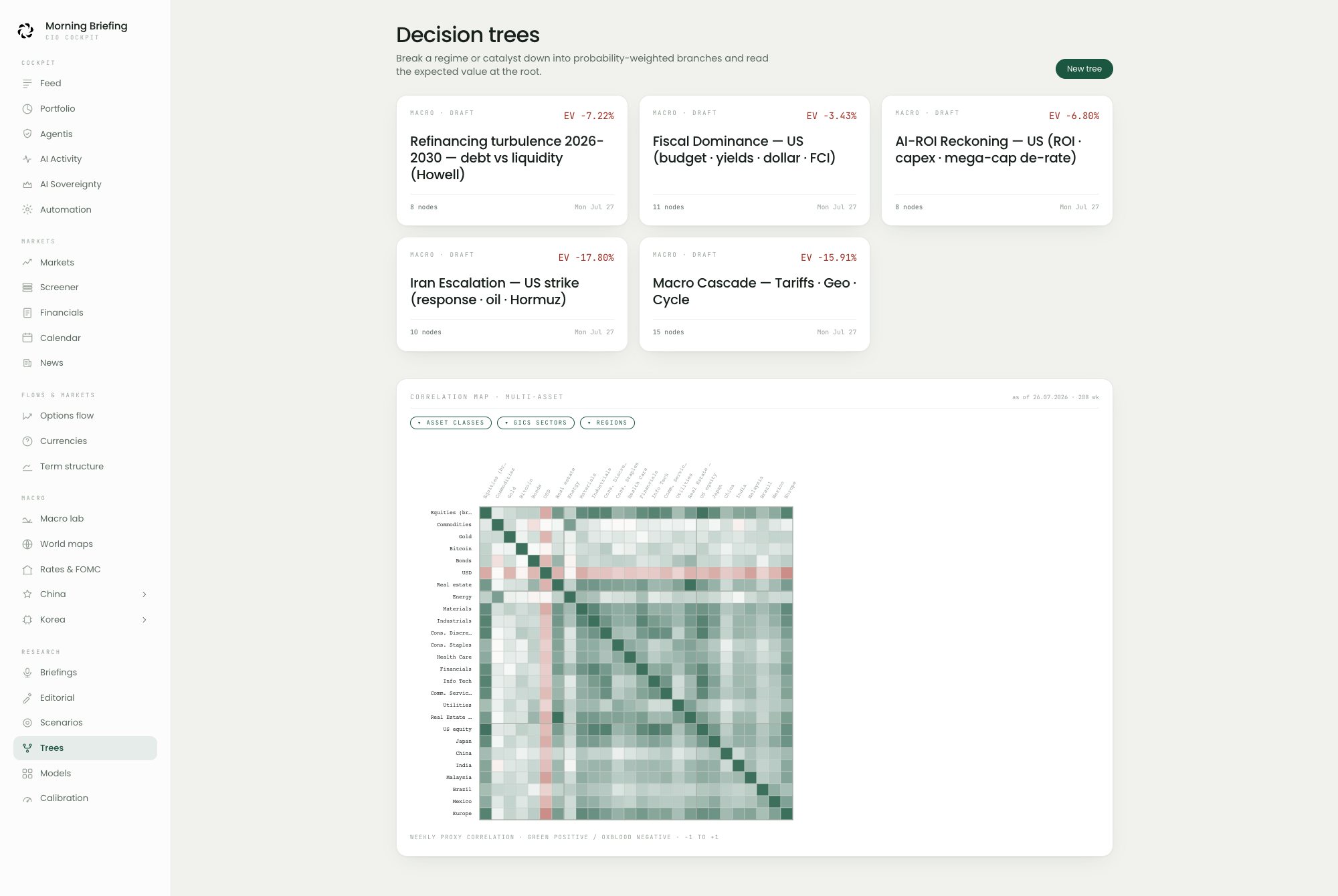
Validated signals then tilt the allocations of the model portfolios set by the team, and every weight stays decomposable: this much from the macro model, this much from the decision trees, this much from research. The house view reads in the numbers, and every number can be explained.
The first agentic financial product
This research feeds a first agentic financial product in live market conditions, on a pilot portfolio. It inherits the cockpit’s guardrails and adds more:
- an investment committee of agents that argues every case for and against, the dissenting view kept word for word;
- risk guardrails written in code, not only in a directive;
- one rule without exception: every proposal passes a human approval gate, and every action is logged in a chained, verifiable audit trail.
The system also scores its own forecasts, continuously: every probabilistic call is recorded and then scored as it resolves. That is how you learn whether the numbers are trustworthy, or merely confident.
A performance track record is being built. We will publish figures only once they are real, verifiable and audited.
What it changes for a manager
The CIO Cockpit is not sold off the shelf: it is built to measure, around a firm’s existing investment process. The agent does not replace domain knowledge, it informs and documents it.
That is also the conviction that governs the whole division: agentic AI needs to be grounded in a well-thought-out process, rather than naively assuming the agent can be the source of the domain knowledge.
A regulated asset management structure is in preparation to offer these services.
Informational and educational content only: this is neither personalised investment advice, nor an offer, nor a solicitation. The screenshots shown illustrate method and tooling, not recommendations.
Be the first to read our upcoming papers.
Some articles are reserved. Leave your email to unlock access to upcoming Meotis Research publications.
Share